
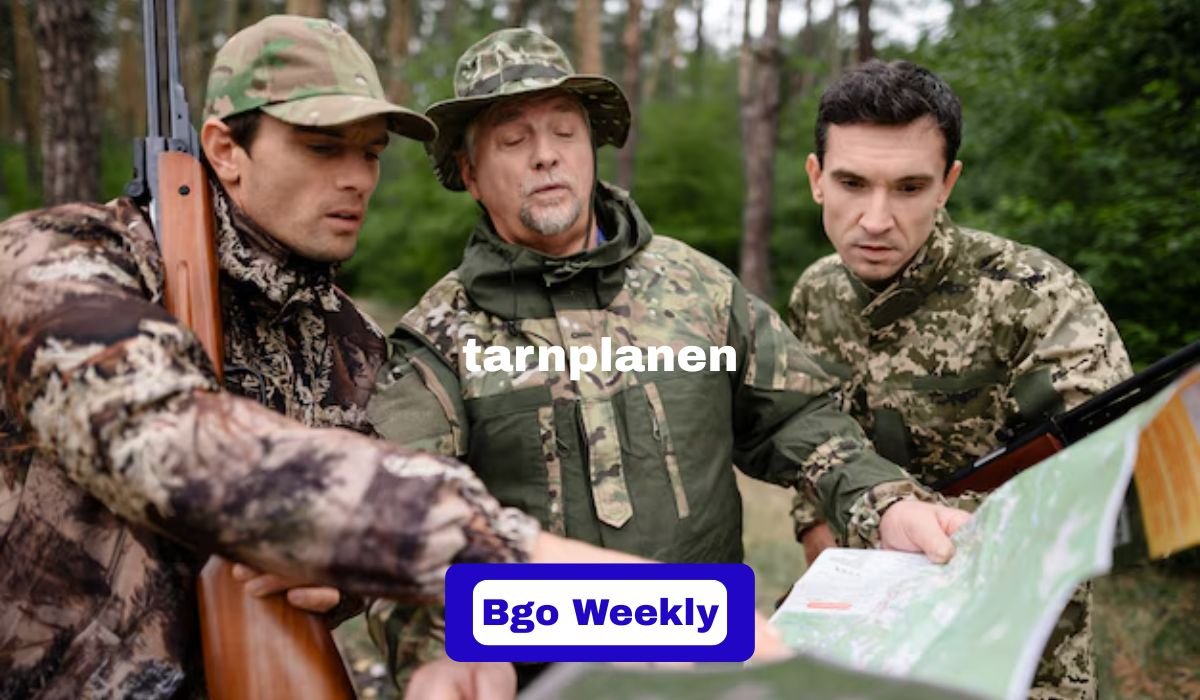
Introduction To Tarnplanen
Tarnplanen is one of those terms that might sound unfamiliar at first, but its role in both military and outdoor activities is profound. Simply put, Tarnplanen is a specialized camouflage fabric designed to conceal objects, equipment, and even people by blending seamlessly into the surrounding environment. From forests and deserts to urban landscapes, Tarnplanen offers a level of adaptability that has made it a crucial tool in modern camouflage techniques.
Whether you are a soldier, wildlife enthusiast, hunter, or camper, understanding Tarnplanen can open doors to smarter, more effective stealth strategies. This article dives deep into the history, science, practical uses, and future of Tarnplanen, giving readers a complete understanding of why it remains an essential tool in concealment and camouflage today.
Key Facts About Tarnplanen
Tarnplanen originated from military camouflage techniques.
It is designed to disrupt outlines and blend with surroundings.
The fabric is lightweight and easy to transport.
Tarnplanen is durable and can withstand harsh environments.
It is used in forests, deserts, and urban landscapes.
Wildlife photographers use it to observe animals without disturbance.
Campers and hunters use it for concealment and shelter.
Military-grade versions consider infrared and thermal detection.
Digital printing allows precise and adaptable patterns.
It can be combined with natural elements for enhanced concealment.
Tarnplanen maintains effectiveness over time and repeated use.
Some modern fabrics use multi-spectral camouflage technology.
Proper deployment requires understanding terrain and lighting.
It can be applied to vehicles, tents, and personal equipment.
Future versions may include smart textiles and nanotechnology.
Its adaptability makes it suitable for both civilian and military use.
Tarnplanen improves operational stealth and tactical advantage.
Regular maintenance ensures durability and effectiveness.
It is more versatile than traditional camouflage patterns.
Research in human vision informs its design.
A Brief History Of Tarnplanen
The origins of Tarnplanen trace back to the early 20th century during World War I. At that time, military strategists sought innovative ways to hide soldiers, artillery, and equipment from enemy observation. Early camouflage techniques were simple, using painted patterns or cloth coverings, but the idea of a dedicated camouflage material laid the groundwork for what we now know as Tarnplanen.
Through World War II, Tarnplanen evolved significantly. Soldiers were equipped with materials designed not only to hide them but also to provide a strategic advantage by making movements and positions less detectable. Inspired by natural camouflage patterns observed in animals, scientists and designers studied textures, colors, and shapes to improve the effectiveness of these fabrics.
The late 20th century brought digital printing technology, enabling patterns to be printed in fine detail on advanced materials. Today, Tarnplanen is widely used in both military and civilian applications, ranging from tactical operations to wildlife observation and outdoor recreation. Its evolution reflects decades of research in materials, optics, and visual perception, making it more sophisticated and versatile than ever.
How Tarnplanen Works: The Science Behind Camouflage
Tarnplanen’s effectiveness is rooted in science. The fabric is designed to disrupt outlines and patterns that the human eye can detect, effectively making objects blend into their surroundings. This relies on principles of optical perception, including depth recognition, motion detection, and color contrast.
Advanced Tarnplanen materials also utilize adaptive camouflage techniques. By mimicking natural textures such as leaves, sand, or urban surfaces, the fabric creates an illusion that makes it harder for observers to detect. Some modern variations even use multi-spectral technology, ensuring that the camouflage remains effective across different light conditions, from bright sunlight to low-light or shadowed areas.
Understanding human vision is also central to Tarnplanen’s design. Researchers study how eyes perceive motion and depth, informing the patterns and textures used in the fabric. The result is a highly effective tool that goes beyond simple pattern replication—it creates a dynamic form of concealment that adapts to how humans visually process the environment.
Key Features Of Tarnplanen
One of the most notable qualities of Tarnplanen is its versatility. It is lightweight, making it easy to transport during long missions or outdoor adventures. Its durability ensures that it withstands harsh environmental conditions without compromising effectiveness.
The patterns on Tarnplanen are designed for adaptability, allowing the fabric to blend into multiple terrains, from dense forests to open deserts or urban areas. Additionally, high-quality materials maintain their color and texture even after prolonged use, making Tarnplanen a cost-effective solution for both professional and recreational users. Its combination of portability, resilience, and multi-terrain capability makes it a standout in the field of camouflage materials.
Military Applications Of Tarnplanen
Military operations benefit significantly from Tarnplanen. Soldiers use it to conceal personnel, equipment, and vehicles in diverse terrains, including forests, deserts, and urban settings. This concealment enhances safety by reducing visibility to enemy forces and increases tactical effectiveness.
In addition to visual camouflage, Tarnplanen can provide strategic advantages, allowing forces to observe and maneuver without detection. Modern military-grade versions also consider thermal signatures, making them effective against infrared detection in certain contexts.
Tarnplanen has become a standard in many defense operations worldwide, not only as a functional material but also as a tool for improving operational planning and stealth execution.
Tarnplanen For Wildlife And Nature Observation
Beyond the battlefield, Tarnplanen is invaluable for wildlife enthusiasts, photographers, and researchers. By blending into natural environments, users can observe animals without disturbing their behavior. Its lightweight nature makes it easy to carry to remote locations, while its adaptability ensures that it matches various environmental backdrops, from leafy forests to rocky terrains.
Researchers have found that using Tarnplanen allows for closer study of wildlife without altering natural activity patterns. For photographers, it provides a discreet way to capture authentic animal behavior in its natural habitat. The same principles that make it effective in military use also make it a perfect tool for conservation and wildlife observation.
Urban And Recreational Uses
Tarnplanen is not limited to nature and military environments. In urban settings, security professionals use it for discreet surveillance and tactical operations, taking advantage of its ability to blend into surroundings such as rooftops, alleys, and parks.
Recreationally, Tarnplanen is increasingly popular among campers, hunters, and outdoor enthusiasts. It can be used as a tent cover, shelter, or protective layer, providing concealment from both wildlife and other people. Its portability and ease of setup make it practical for extended outdoor trips, and its versatility ensures it is effective in a wide range of urban and wilderness environments.
How To Use Tarnplanen Effectively
To get the best results from Tarnplanen, start by selecting the right environment. Analyze the terrain and identify natural elements that will enhance concealment. Once chosen, lay the fabric carefully over surfaces or structures, ensuring it fits snugly and eliminates gaps that could reveal your position.
Adding natural elements like foliage or branches around the edges can further disrupt outlines and create depth, enhancing the camouflage effect. Regular maintenance is crucial—check for damage or wear after each use, as even small tears or discoloration can compromise effectiveness.
Familiarity with different deployment scenarios is also important. Practicing in varied lighting, weather, and terrain conditions ensures that Tarnplanen can be used confidently when stealth is essential.
Comparing Tarnplanen With Traditional Camouflage
Traditional camouflage often relies on fixed patterns designed for a specific type of terrain. While effective in certain conditions, these fabrics are limited in adaptability and durability. Tarnplanen improves on these limitations by offering multi-environment effectiveness and advanced materials that withstand prolonged use.
Unlike standard camouflage, which may fade or wear quickly, Tarnplanen maintains its concealing capabilities over time. Its versatility extends beyond military applications, making it useful for outdoor recreation, wildlife observation, and urban operations. This combination of durability, adaptability, and modern design sets Tarnplanen apart as a superior solution for camouflage needs.
Limitations And Challenges Of Tarnplanen
While Tarnplanen is highly effective, it is not without limitations. Its performance can vary depending on terrain, lighting, and environmental conditions. What works in a dense forest may not be as effective in a desert or urban landscape.
Durability can also be a concern, as heavy use or rough handling may damage the fabric. The learning curve for proper deployment can limit its effectiveness for beginners, and advanced surveillance technology such as drones or thermal imaging can sometimes overcome visual camouflage.
These challenges highlight the need for continued research and innovation to ensure Tarnplanen remains effective in an increasingly technological world.
The Future Of Tarnplanen
The future of Tarnplanen is exciting, with technology promising significant advancements. Smart textiles equipped with sensors could allow fabrics to adapt dynamically to changing environmental conditions. Nanotechnology may produce lighter, more versatile versions that enhance mobility and concealment.
In addition to military and recreational applications, Tarnplanen principles may be applied in wildlife conservation, fashion, and architecture. Fabrics could be designed to blend seamlessly with surroundings while remaining functional and aesthetically pleasing. These innovations suggest that Tarnplanen will continue evolving as a multi-purpose tool for concealment, safety, and even creative design.
Conclusion
Tarnplanen is more than just a camouflage fabric—it is a sophisticated tool that combines science, design, and adaptability to provide effective concealment across multiple environments. Its evolution from early military use to civilian applications demonstrates its versatility and continuing relevance in 2025 and beyond.
By understanding its science, applications, and proper deployment, users can maximize its potential whether in tactical operations, outdoor adventures, or wildlife observation. While challenges exist, ongoing innovation ensures that Tarnplanen will remain a leading solution in the field of camouflage. Its combination of durability, adaptability, and scientific design sets it apart, making it an indispensable tool for anyone seeking effective concealment in the modern world.
FAQs About Tarnplanen
What Is Tarnplanen Used For?
Tarnplanen is used for concealment across military, outdoor, and urban environments. It hides personnel, equipment, and wildlife observers by blending into surroundings.
How Does Tarnplanen Work?
It works by disrupting outlines, using colors and patterns that mimic the environment. Some advanced versions also consider multi-spectral and thermal camouflage.
Can Tarnplanen Be Used In Urban Areas?
Yes, security professionals and enthusiasts use it for covert operations and surveillance in cities and other urban settings.
Is Tarnplanen Durable And Weatherproof?
High-quality Tarnplanen is designed to be durable and withstand harsh weather, making it effective for long-term use.
How Is Tarnplanen Different From Traditional Camouflage?
Unlike traditional fixed patterns, Tarnplanen adapts to multiple terrains and lighting conditions, and it maintains its effectiveness over time.
Can Tarnplanen Be Used For Wildlife Observation?
Absolutely. It allows photographers and researchers to observe animals without causing disturbance, making it ideal for wildlife studies.
What Are The Limitations Of Tarnplanen?
Effectiveness can vary depending on terrain, lighting, and advanced surveillance technologies. Rough handling may reduce durability.
What Does The Future Hold For Tarnplanen?
Future innovations include smart textiles, nanotechnology, and even applications in fashion and architecture, allowing fabrics to adapt dynamically to their environment.
Please More Read Also: Health Threetrees Com VN: A Simple 3-Pillar Plan For Everyday Wellness