
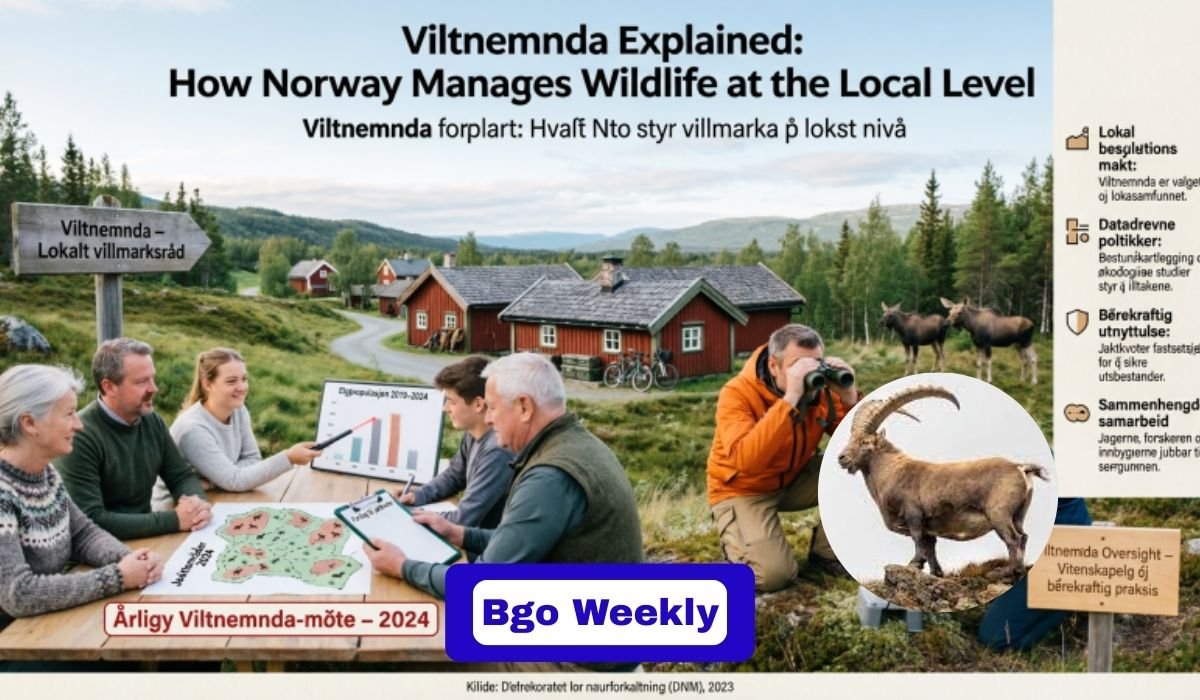
Norway is known for its dramatic fjords, deep forests, and wide mountain plateaus. These landscapes are home to Moose, Red Deer, Roe Deer, Lynx, Wolverines, and Wolves. Managing such rich Wildlife is not simple. Populations must stay healthy, ecosystems must remain balanced, and local communities must feel safe and heard. This is where Viltnemnda plays a vital role.
Viltnemnda is at the heart of Wildlife Management In Norway. It represents a local, practical approach to Conservation, Hunting Regulation, and Biodiversity Protection. Instead of relying only on central authorities, Norway gives real responsibility to Municipal Wildlife Committees. This system makes Wildlife Governance more flexible, science-based, and rooted in local knowledge. In this article, you will learn how Viltnemnda works, why it matters, and how it continues to shape Sustainable Wildlife Management in 2025.
Quick Bio Information
Official Name: Viltnemnda
Country: Norway
Level: Municipal
Legal Basis: Wildlife Act
Main Focus: Wildlife Management
Key Species: Moose, Red Deer, Roe Deer
Predator Oversight: Lynx, Wolves, Wolverines
Authority Type: Local Government Committee
Appointed By: Municipal Council
Main Task: Set Hunting Quotas
Core Goal: Sustainable Wildlife Use
Works With: County Authorities
Supports: Biodiversity Protection
Balances: Conservation And Hunting
Established: Decades Ago Through Municipal Reform
Decision Style: Data-Based And Collaborative
Community Role: Conflict Mediation
2025 Focus: Climate Adaptation And Digital Monitoring
What Is Viltnemnda
Viltnemnda refers to Municipal Wildlife Committees appointed by local councils across Norway. These committees operate under national legislation but make decisions at the municipal level.
In simple terms, Viltnemnda is responsible for managing Wild Game and Wildlife Resources within a specific municipality. This includes setting Hunting Quotas, monitoring Animal Populations, and handling local Wildlife Conflicts. The system reflects Norway’s strong tradition of Local Democracy, where municipalities play an active role in Environmental Governance.
Viltnemnda ensures that Wildlife Management is not distant or abstract. Decisions are made close to the land, by people who understand local forests, valleys, and agricultural areas.
The Legal Foundation Of Viltnemnda
Wildlife Management in Norway is guided by the national Wildlife Act, commonly known as Viltloven. This law establishes principles for Sustainable Use, Biodiversity Protection, and Responsible Hunting.
Under this framework, municipalities are given authority to manage certain Wildlife Matters locally. Viltnemnda operates within these legal boundaries while cooperating with County Governors and National Environmental Authorities.
The law requires that Wildlife be managed in a way that preserves Species Diversity and maintains Ecological Balance. Hunting is allowed, but only when it supports Sustainability. Viltnemnda ensures these rules are applied in practical, local contexts.
The History Behind Local Wildlife Committees
The roots of Viltnemnda go back several decades. As Moose and Deer Populations increased during the 20th century, conflicts with Forestry and Agriculture grew. Centralized management proved too slow and disconnected from local realities.
Norway responded by strengthening Municipal Authority. By giving communities control over Hunting Regulations and Wildlife Monitoring, the country created a more adaptive system.
Over time, Viltnemnda became a cornerstone of Norwegian Wildlife Policy. It reflects a belief that those who live closest to nature should also help manage it.
Who Serves On Viltnemnda
Members of Viltnemnda are typically appointed by Municipal Councils. They often include Landowners, Hunters, Environmental Representatives, and individuals with Agricultural or Ecological knowledge.
This diverse representation is important. Wildlife Management is not just about animals. It affects Farmers, Outdoor Recreation, Forestry Businesses, and Tourism.
Because members usually live in the area they serve, they bring valuable Local Knowledge. They understand migration patterns, seasonal changes, and historical population trends. This practical insight strengthens Scientific Data and creates better decisions.
Core Responsibilities Of Viltnemnda
Viltnemnda has several key responsibilities within Wildlife Management In Norway. One of its primary tasks is setting Local Hunting Quotas for species such as Moose and Red Deer. These quotas are based on Population Data, Habitat Conditions, and Sustainability Goals.
The committee also monitors Wildlife Damage, especially when animals affect crops, forests, or livestock. In some cases, Viltnemnda may authorize targeted culling to prevent overpopulation.
Another responsibility includes approving Hunting Plans and ensuring Ethical Hunting Practices. The aim is always balance. Wildlife should thrive, but so should local communities.
How Wildlife Populations Are Monitored
Effective Wildlife Management depends on accurate information. Viltnemnda relies on Population Surveys, Hunter Reports, Field Observations, and collaboration with Wildlife Biologists.
Moose Populations, for example, are monitored through harvest data and field counts. Hunters report detailed statistics after each season. These numbers help estimate Population Trends and Reproductive Rates.
Modern Technology also plays a growing role. GPS Tracking, Digital Reporting Systems, and Data Sharing between municipalities improve accuracy and transparency.
The Decision-Making Process At The Local Level
The decision-making process within Viltnemnda is structured and transparent. Meetings are held regularly to review Population Data, Community Feedback, and National Guidelines.
Before setting Hunting Quotas, the committee evaluates Sustainability Indicators. These include population size, health, and long-term ecological impact.
Local Stakeholders are often consulted. Farmers may share concerns about Crop Damage. Hunters provide insights from field experience. Environmental Groups contribute Conservation Perspectives.
This balanced approach ensures that Wildlife Policy is not one-sided but rooted in cooperation.
Managing Large Mammals In Norway
Large Mammals such as Moose, Red Deer, Roe Deer, Lynx, and Wolves require careful management. Moose, in particular, are central to Norwegian Hunting Culture and Forestry Economics.
If Moose Populations grow too large, they can damage young forests and increase traffic accidents. If they decline too much, ecosystems and hunting traditions suffer.
Predators like Wolves and Lynx are more controversial. Norway maintains strict regulations for Predator Management, aiming to protect Biodiversity while addressing Livestock Concerns. Viltnemnda plays a role in implementing these policies locally.
Balancing Conservation And Hunting Traditions
Hunting is deeply rooted in Norwegian Culture. It is both a tradition and a tool for Sustainable Wildlife Management.
Viltnemnda ensures that Hunting remains responsible. Quotas are designed to prevent overharvesting while keeping populations stable. Ethical Standards are enforced to reduce unnecessary suffering and protect vulnerable species.
This balanced system shows that Conservation And Hunting are not opposites. In Norway, they often work together under careful regulation.
Addressing Human-Wildlife Conflicts
Human-Wildlife Conflict is one of the biggest challenges in Wildlife Management. Moose can damage crops. Predators can threaten livestock. Expanding Infrastructure can disturb natural habitats.
Viltnemnda acts as a mediator. It reviews complaints, evaluates damage reports, and decides on appropriate measures. Sometimes this means adjusting quotas. In other cases, it may involve preventive strategies.
Open communication between communities and committees reduces tension and builds trust.
Climate Change And Emerging Challenges
In 2025, Climate Change is reshaping ecosystems across Scandinavia. Warmer winters affect migration patterns. Changing vegetation influences food availability.
Viltnemnda must adapt to these changes. Flexible Quota Systems and updated Monitoring Methods help address shifting Wildlife Dynamics.
Urban expansion also creates pressure on habitats. As towns grow, Wildlife Corridors become fragmented. Local planning increasingly considers Ecological Impact alongside development.
Collaboration With National Authorities
Although Viltnemnda operates locally, it does not work alone. It cooperates with County Environmental Departments and National Agencies responsible for Biodiversity and Predator Policy.
This multi-level Governance Model ensures consistency across regions while allowing Local Adaptation. National Authorities set overall goals, but Viltnemnda translates them into practical action.
The result is a system that combines Scientific Research, Legal Structure, and Local Expertise.
The Importance Of Transparency And Public Trust
Public trust is essential for Wildlife Governance. Viltnemnda meetings are typically documented, and decisions are communicated clearly.
Transparency reduces misinformation and strengthens community involvement. When people understand how Hunting Quotas are set or why certain measures are necessary, acceptance grows.
This open approach reflects Norway’s broader commitment to Democratic Participation and Environmental Responsibility.
The Future Of Viltnemnda In 2025 And Beyond
Looking ahead, Viltnemnda continues to evolve. Digital Tools improve reporting. Data Analysis becomes more precise. Climate Adaptation Strategies are refined.
At the same time, the core principle remains unchanged. Wildlife Management should be Local, Sustainable, and Science-Based.
As Norway balances Biodiversity Protection with Economic Activity, Viltnemnda remains a practical example of how Local Governance can succeed in Environmental Stewardship.
Final Thoughts
Viltnemnda represents a practical and balanced approach to Wildlife Management In Norway. It combines Law, Science, and Local Knowledge to protect Biodiversity while respecting Hunting Traditions and Community Needs.
In 2025, as Environmental Challenges grow more complex, the importance of Local Governance becomes even clearer. Viltnemnda shows that Sustainable Wildlife Management works best when decisions are informed, transparent, and rooted in the communities they affect.
Through cooperation, careful monitoring, and respect for nature, Viltnemnda continues to shape a future where Wildlife And People Coexist In Harmony.
FAQs About Viltnemnda
What Does Viltnemnda Do
Viltnemnda manages Wildlife at the Municipal Level. It sets Hunting Quotas, monitors Animal Populations, and addresses Human-Wildlife Conflicts while following National Wildlife Law.
Is Viltnemnda Part Of The National Government
Viltnemnda operates locally under Municipal Councils. However, it works within National Legislation and cooperates with higher Environmental Authorities.
How Are Hunting Quotas Decided
Hunting Quotas are based on Population Data, Sustainability Assessments, and Local Consultation. The goal is to maintain Ecological Balance while allowing Responsible Hunting.
Does Viltnemnda Manage Wolves And Lynx
Yes, but within National Predator Policies. The committee implements regulations locally and helps manage conflicts related to Livestock and Predator Presence.
Why Is Local Wildlife Management Important
Local Management allows decisions to reflect Regional Conditions, Community Needs, and Specific Ecological Factors. It increases efficiency and public trust.
How Does Viltnemnda Address Climate Change
By adapting Monitoring Systems, adjusting Hunting Plans, and cooperating with Environmental Experts, Viltnemnda responds to changing Wildlife Patterns influenced by Climate Change.
Please People Read Also: Tsunaihaiya Explained: The Cultural Festival That Unites Communities